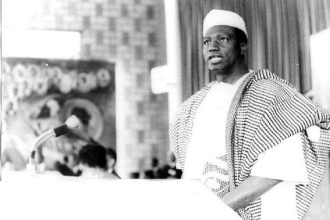
Africa Day marks the moment African nations came together in 1963 to push for a united and self-determined continent. In 2026, that spirit of unity is being directed at one of Africa’s biggest challenges which is the access to clean water and safe sanitation.
The African Union’s 2026 theme which is “Assuring Sustainable Water Availability and Safe Sanitation Systems to Achieve the Goals of Agenda 2063” highlights the reality millions of Africans still face every day with unsafe water, poor sanitation, and limited access to basic hygiene.
The Current State of Access to Water in Africa
More than 400 million people across sub-Saharan Africa still cannot access basic drinking water. In many communities, that means a woman or a girl can walk sometimes for hours to collect water from a source that may not even be safe. Across Africa, women and young girls spend an estimated 200 million hours every day just collecting water. This is a time they are meant to be in school, work or even resting.
Climate change is making the problem worse as the rate of predicting rain is low. Also, rivers that communities have depended on for generations are drying up.
Lack of clean water in Africa is not only a rural problem. Many cities are growing faster than their water systems can handle. In crowded urban communities like Lagos for example, millions of people still struggle to access safe and affordable water. In many cases, poorer residents end up paying more for water than people living in wealthier neighbourhoods with steady running taps.
The Sanitation Challenge Across Africa
Sanitation is a conversation that people find hard to talk about. Which is exactly why it keeps getting worse.
Two in three people across sub-Saharan Africa lack access to basic sanitation. In rural areas, that number climbs even higher. For any child trying to stay in school, the absence of a safe, private toilet is such a big inconvenience. For a mother giving birth in a rural clinic, a facility with no running water is not just uncomfortable, it is dangerous and highly risky.
In Ethiopia, only about 7 percent of the population has access to basic sanitation services and in rural areas, the figure drops to just 4 percent. In a country of more than 132 million people, It is a daily crisis affecting homes, schools, and healthcare centres across the country.
Poor sanitation moves through communities through contaminated water, through soil, and everything and everywhere we breathe in and out through. This eventually leads to getting people sick and people dying.
Why Sustainable Water and Safe Sanitation Matter
Water and sanitation are often discussed as charity issues, but the impact goes far beyond that. Poor access to clean water and safe sanitation affects health, education, productivity, and economic growth across the continent.
The African Union has noted that inadequate water and sanitation cost Sub-Saharan Africa billions every year. Key sectors like agriculture, manufacturing, energy, and healthcare all depend heavily on reliable water access. When water systems fail, economies suffer too.
Africa cannot achieve long-term growth while millions of people still lack access to something as basic as clean water and proper sanitation.
What Africa Must Prioritise Moving Forward
Africa already has plans and commitments around water and sanitation. The bigger challenge is turning those promises into visible results with having clean water in homes, working sanitation systems, and better facilities in schools and communities.
Governments need to treat water infrastructure as something highly important. Investment in water and sanitation should be given the same priority as roads, transport, and energy. Large-scale programmes like the World Bank’s Water Supply, Sanitation, and Hygiene (WASH) initiative across several African countries show that progress is possible when funding and clear targets are backed by action.
Communities also need to be part of the solution. Local residents, especially women, who are often most affected by water shortages should be involved in how water systems are planned and maintained. Projects are more likely to succeed when communities have ownership over them.
At the same time, Africa’s young engineers, scientists, and innovators need support to develop practical solutions that fit local realities across the continent.
Africa Day is a celebration day, but it is also a reminder of the work that still needs to be done. Having access to clean water and safe sanitation are basic needs that affect how people live every day from children’s health and education to women’s safety and economic growth across the continent.
Africa already understands the problem. What matters is delivering real solutions that reach homes, schools, and communities.
Africa Day 2026 is a reminder of that responsibility and of the kind of continent Africans are still working to build where clean water, safe sanitation, and dignity are accessible to everyone.