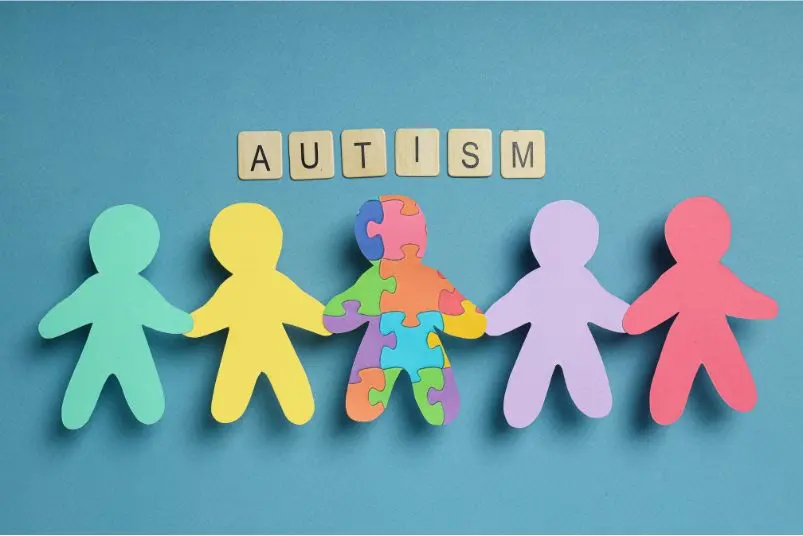
Today, the world recognizes World Autism Awareness Day. It is a day the United Nations set aside to shine a light on autism and the millions of people living with it.
Autism is a neurodevelopmental condition that affects how a person communicates, interacts socially, and processes the world around them. The World Health Organization estimates that 1 in every 100 children globally is autistic. In Africa, the reality is likely the same but you would never guess that from our screens.
When autism is not represented in the stories we tell, families misread it, hide it, or explain it through superstition. Research from Nigeria and South Africa confirms that autism is regularly misdiagnosed or mistaken for spiritual affliction even by trained healthcare workers.
Representation does not solve everything, but it tells a family or an individual that they are not alone.
Here are 7 African and Africa connected productions that portray autism and why the stories we tell, or fail to tell, matter more than we think.
1. Musical Whispers-Nigeria (2014)
This is the most important autism story Nollywood has told. It was directed by Bond Emeruwa and produced by veteran actress Ebele Okaro-Onyiuke. Musical Whispers follows Agatha, played by Chioma Chukwuka Akpotha, a mother raising an autistic son, David Jr., alongside her cheating husband.
What makes this film remarkable is what it refuses to do. As this review on Nollywood Reinvented notes, autism is addressed respectfully, with no supernatural explanations, and the film does not shy away from the hard realities of parenting an autistic child. It portrays music therapy as a genuine tool for autism which is scientifically supported and even serves as a platform for the Autism Association of Nigeria.
Musical Whispers proved that Nigerian audiences can receive autism stories with warmth and intelligence.
2. A Touch from Love- Nigeria (2025)
This was directed by Ray Adeka and the film centres on Nathaniel, a young man with autism spectrum disorder whose inheritance makes him a target for scheming family members. His protector is Mana, an advocate who fights for his dignity at every turn.
Reviewed on Nollywood Times, the film is praised for portraying autism with depth and sensitivity. It frames autism as a condition that makes a person vulnerable to exploitation when systems fail them. That is a conversation Africa has not had enough of. This film represents a new level of maturity in how Nollywood engages with autism and neurodiversity.
3. He’s Not Cursed, He’s Autistic-Kenya (2025)
This documentary from Willow Health Media, Kenya’s first dedicated health and science newsroom, supported by the Bill & Melinda Gates Foundation is one of the most honest portrayals of autism from an East African perspective. It takes its title directly from the words that define the autism experience in Kenya that the belief that autistic children are spiritually afflicted rather than neurologically different.
As Willow Health Media’s own reporting documents, autism in Kenya remains one of the most misunderstood neurodevelopmental conditions in the country. The Autism Society of Kenya estimates that as many as 1 in 25 children may be affected, approximately 2.2 million Kenyans, yet the condition does not even appear in national health surveys.
Families describe their children being called “touched by spirits.” Mothers describe praying to outlive their autistic children by just one day, because there is no one else to care for them.
This documentary puts those families on screen and refuses to let the silence continue. For a country where autism awareness is this critically low, a documentary that declares in its very title that this child is not cursed is an act of cultural courage.
4. Special- Nigeria (2025)
Special is a 2025 Nigerian drama about Osaze, a 25-year-old autistic man who has spent his life hidden by his family out of shame. When a warm and perceptive new carer enters his world, she begins to uncover abilities in Osaze that his family never allowed themselves to see and in doing so, challenges everything they believe about what it means to be different.
This film speaks directly to one of the most painful realities of autism in Africa. Special asks a harder question about what we lose when we hide the people we are supposed to love?
The story of Osaze is the story of thousands of autistic Africans who have never been seen.
5. Everything Light Touches- Nigeria (2025)
Everything Light Touches is directed by Adejo “StoryPriest” Emmanuel and Elma Baisie and it tells the story of Abayomi, a gifted autistic teenager who, after a tragic event, finds himself living in an underbridge community. There, he becomes an unexpected beacon of hope for a group of outsiders preparing for a high-stakes chess competition.
This film is significant for several reasons. As reported by Broadcast Media Africa, the filmmakers deliberately set out to foster conversations about autism and inclusivity in African society, addressing the widespread misunderstanding that autistic individuals face in Nigeria daily.
By centering Abayomi’s genius and his capacity to inspire others, the film pushes back against the idea that autism is only a story of limitation. It is also a product of Africa’s next generation of filmmakers, developed through the MTF class of 2024 which makes it a sign of where African storytelling is heading.
6. The Reason I Jump- Sierra Leone/Global (2020)
Based on the memoir of Japanese autistic writer Naoki Higashida, this Sundance award-winning documentary is one of the closest things to a first-person autism experience ever put on film. It follows five non-verbal autistic individuals from across the world, one of whom is a young man from Sierra Leone giving them the storytelling space that mainstream media almost never offers.
As noted by the New York Film Academy, the film won the World Cinema Documentary Audience Award at Sundance 2020. The Sierra Leonean story inside this documentary is rare and significant. It is a glimpse of what millions of African families living with autism experience daily without resources, without diagnosis, and almost entirely without public awareness.
This film refuses to let awareness about Autism stay hidden.
7. If Wishes Were Horses- Nigeria (2025)
It was directed by Chidoxflash and produced by One and Two Films and it tells the story of Munachi, an autistic young woman who is deeply loved by her community for her warmth, humility, and quiet joy.
When Korede, a young man sent east by his mother following a personal failure, arrives in her world, he initially resents her. The story unfolds as he comes to understand what he almost destroyed and what she represents.
What makes Munachi’s portrayal meaningful is its warmth. She is not a problem to be solved or a tragedy to be mourned. She is someone her community cherishes. That framing is rare and important because most autism portrayals, even well-meaning ones, centre suffering.
If Wishes Were Horses centres belonging. For autistic viewers and their families across Africa, seeing autism represented with that kind of communal acceptance carries real emotional weight.
Why Autism Representation in African Media Matters
When autism goes unrepresented in African media, families suffer in silence and children go undiagnosed. Stigma fills the space where the knowledge should be.
Every autistic child who grows up without seeing anyone like them on screen internalises the idea that they do not belong. Every parent who never sees their experience reflected in their culture carries shame that does not belong to them.
The African media has an opportunity to lead. Nollywood is the second-largest film industry in the world. African streaming content is growing faster than almost any other region. The talent and the audiences are here. The stories are here too and they are just waiting to be told.